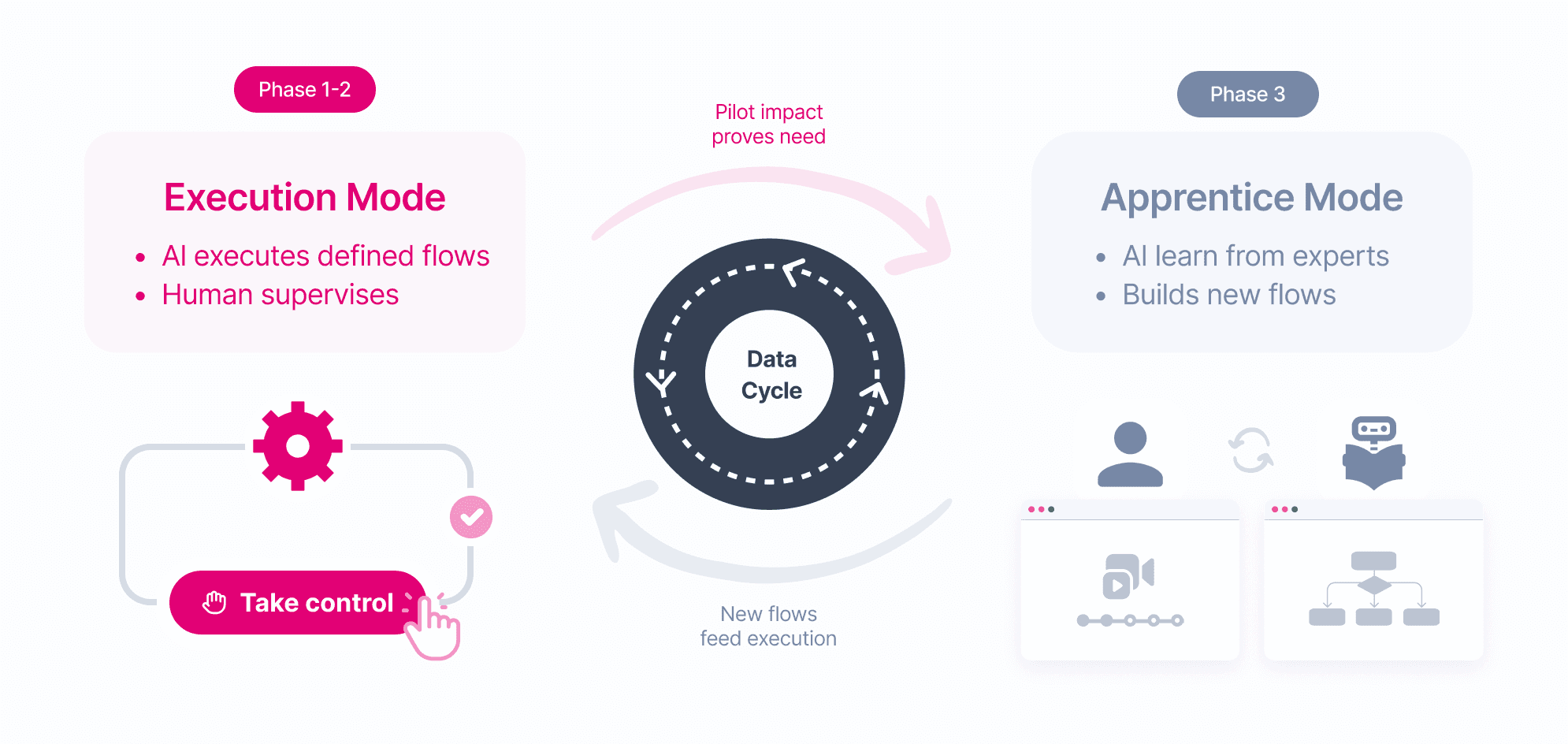
AI Agent Lifecycle ① Expert-Supervised Execution
Designing an AI system for experts to automate workflows in a legacy environment.
Designing an AI system for experts to automate workflows in a legacy environment.
I designed an AI control system to automate manual tasks, shifting 250 field experts from manual work to AI supervision during the pilot. This validation secured executive approval for the next-generation learning system.
I designed an AI control system to automate manual tasks, shifting 250 field experts from manual work to AI supervision during the pilot. This validation secured executive approval for the next-generation learning system.
Timeline
Timeline
Oct 2025 - Present
Oct 2025 - Present
Oct 2025-Present
Platform
Platform
Responsive Web
Responsive Web
Team
Team
1 Designer
6 Engineers
3 AI engineers
3 Product Managers
2 Designers
(1 lead, 1 contract)
6 Engineers
3 AI engineers
3 Product Managers
1 Designer
6 Engineers
3 AI engineers
3 PMs
Roles
Roles
Led end-to-end UX for AI execution system
Defined interaction model and IA
Designed HITL workflows
Drove iterations based on pilot data
Led end-to-end AI execution UX
Defined interaction model and IA
Designed HITL workflows
Drove iterations based on pilot data
Led end-to-end AI execution UX
Defined interaction model and IA
Designed HITL workflows
Drove iterations based on pilot data
Business problem
20% of field orders required manual intervention, resulting in 31,200 repetitive tasks annually and high operational cost and human error
20% of field orders required manual intervention, resulting in 31,200 repetitive tasks annually and high operational cost and human error
Why AI
Because the work was repetitive and rule-based, the team identified AI execution as a viable way to reduce manual effort and human error
Because the work was repetitive and rule-based, the team identified AI execution as a viable way to reduce manual effort and human error
UX Challenge
The first pilot revealed a root problem: experts could not understand what the AI was doing, whether it was still working, or how to verify the result
The first pilot revealed a root problem: experts could not understand what the AI was doing, whether it was still working, or how to verify the result
Solution
Solution
A human-supervised AI execution system built on expert verification and intervention
A human-supervised AI execution system built on expert verification and intervention
0→1 pilot · 250 field staff
0→1 pilot · 250 field staff
"System frozen" reports · 8 → 0
"System frozen" reports · 8 → 0
Pilot impact → Apprentice Mode approved
Pilot impact → New Mode approved
Design-to-Dev pipeline · 2 weeks → 1
Design-to-Dev pipeline · 2 weeks → 1
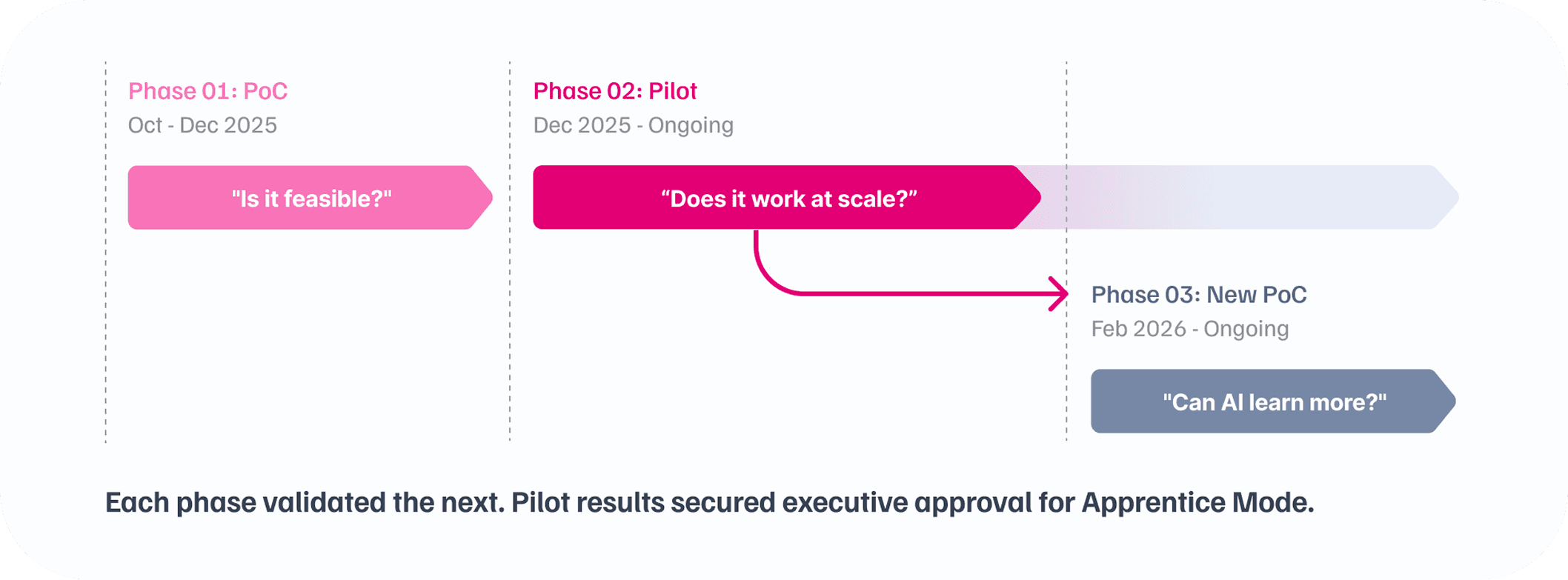
Deep Dive
Deep Dive
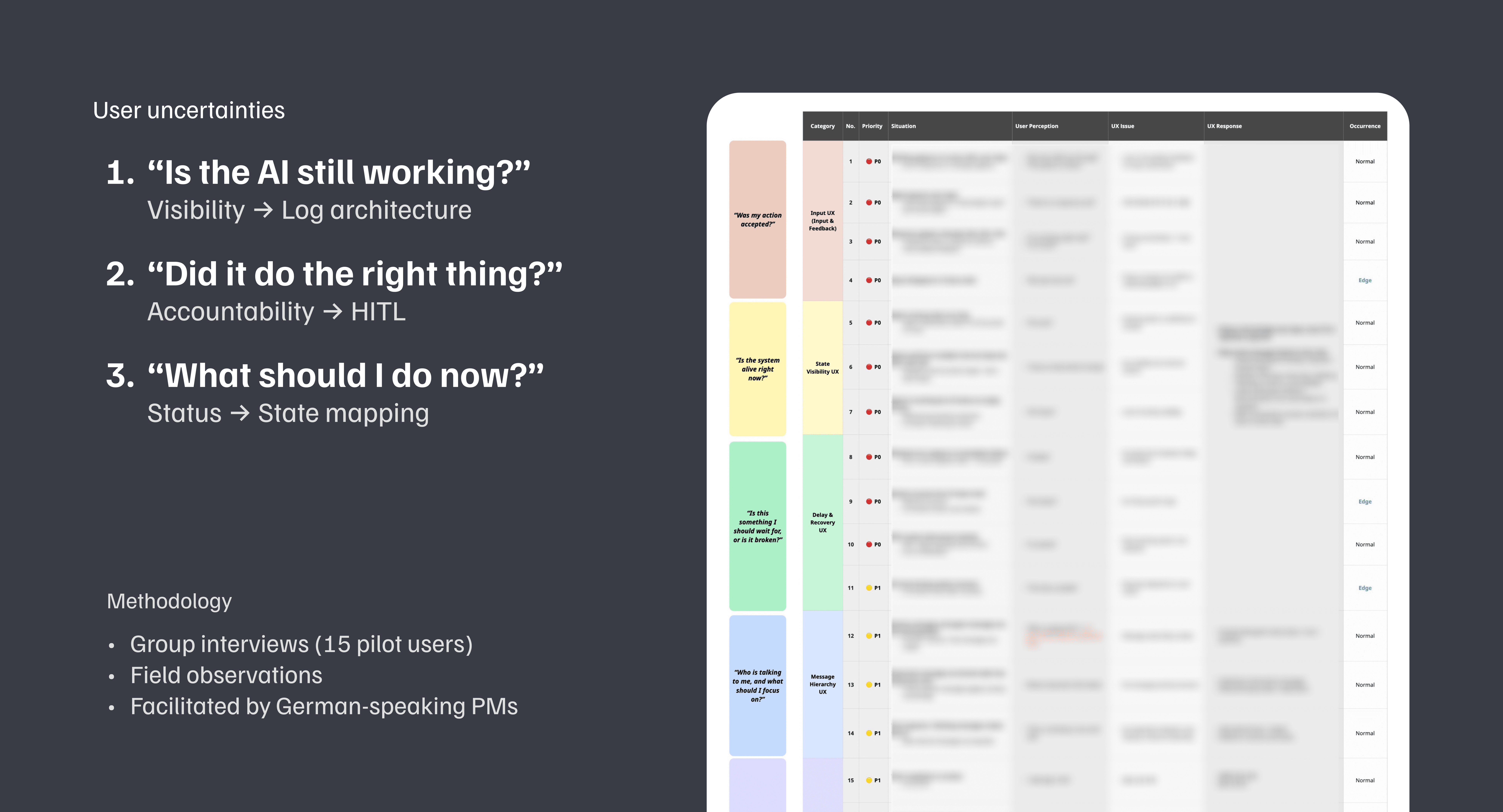
The MVP pilot revealed 3 questions experts could not answer
The MVP pilot revealed 3 questions experts could not answer
Rather than designing the full system around assumptions, we launched a lightweight MVP and moved directly into a live pilot. After analysing 17 UX issues from the first pilot, I reframed them into 3 core user uncertainties.
Rather than designing the full system around assumptions, we launched a lightweight MVP and moved directly into a live pilot. After analysing 17 UX issues from the first pilot, I reframed them into 3 core user uncertainties.
Key Decisions
Key Decisions
① Is the AI still working? → Log architecture
① Is the AI still working? → Log architecture
The answer was not less information, but better translation.
The answer was not less information, but better translation.
My decision
My decision
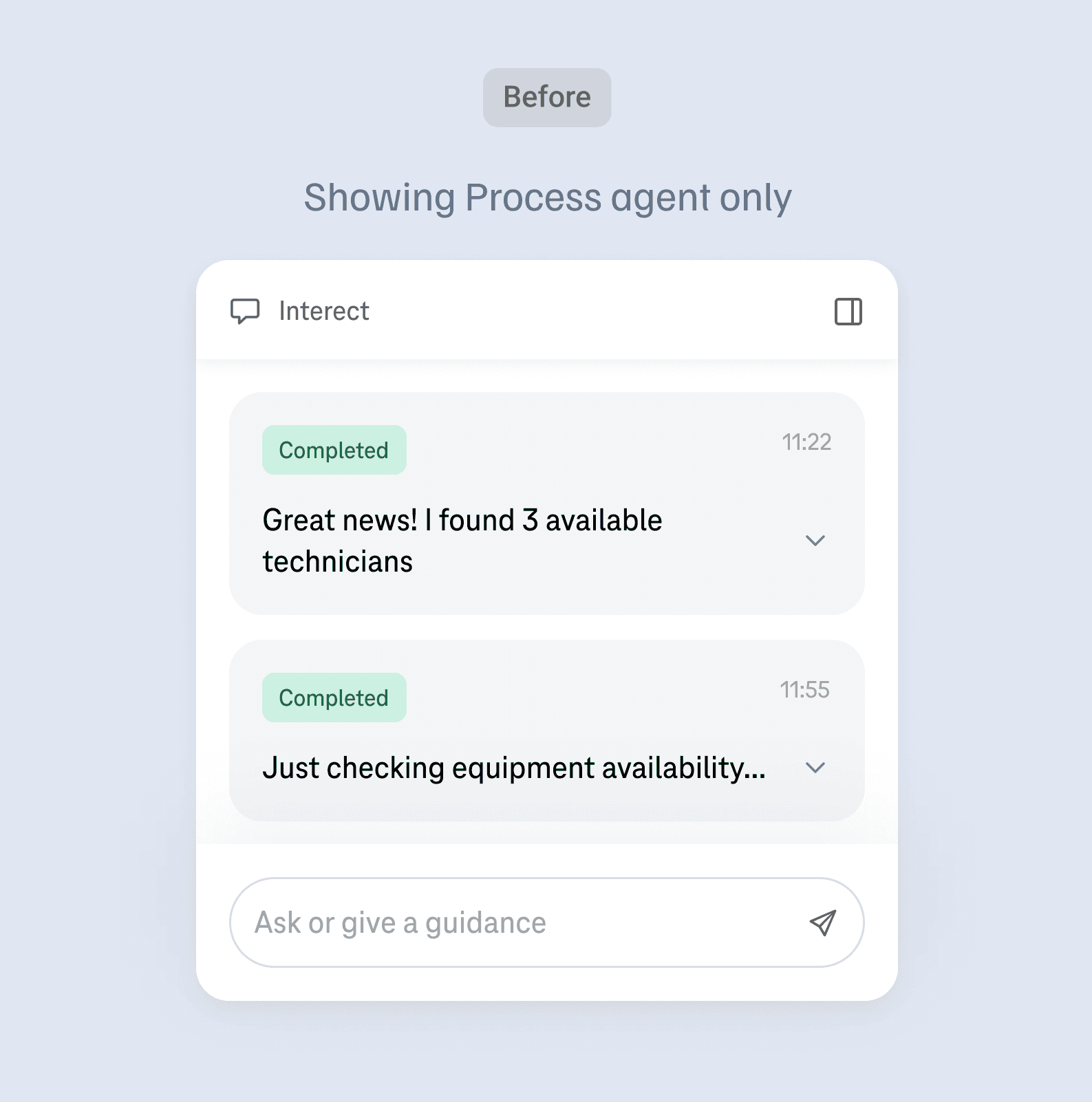
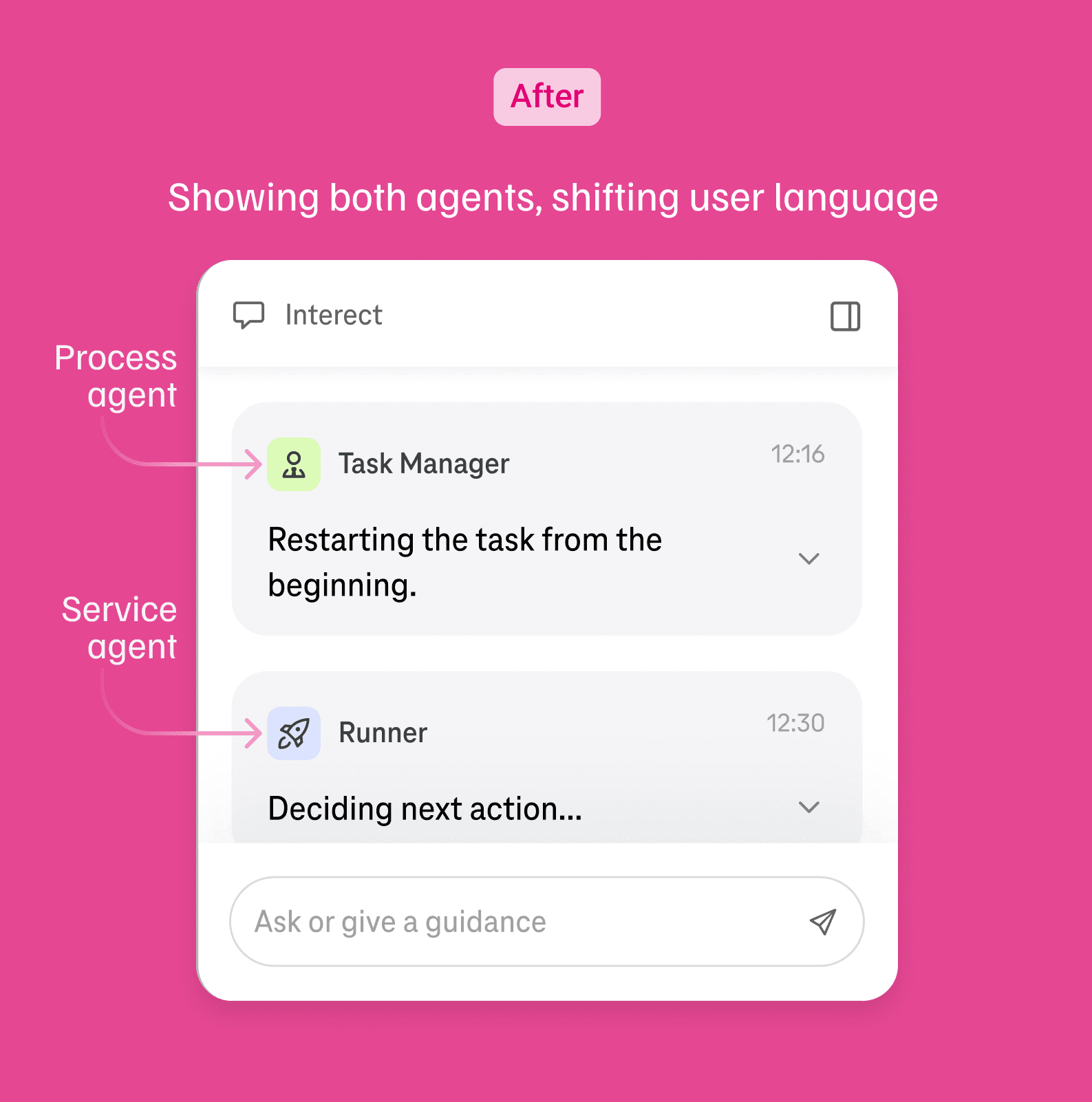
The system uses two agents: 1) manages tasks, 2) executes steps.
The team wanted to expose both, but I pushed for one to reduce noise.
Why I was wrong
Why I was wrong
When the hidden agent worked, the screen looked frozen. Users reported this as a system error. Information gaps were more dangerous than information overload.
When the hidden agent worked, the screen looked frozen. Users reported this as a system error. Information gaps were more dangerous than information overload.
What changed
What changed
The goal shifted from hiding information to reducing perceived stillness. We exposed both agents and replaced system language with action-based user language.
The goal shifted from hiding information to reducing perceived stillness. We exposed both agents and replaced system language with action-based user language.
Impact
Impact
"System frozen" feedback dropped from 8 to 0 per week during pilot.
"System frozen" feedback dropped from 8 to 0 per week during pilot.
② Did it do the right thing? → Human-in-the-Loop
② Did it do the right thing? → Human-in-the-Loop
For experts who've been entering data by hand for years, it wasn’t skepticism toward AI. It was professional accountability.
For experts who've been entering data by hand for years, it wasn’t skepticism toward AI. It was professional accountability.
→ "How do I know if the AI works correctly after a run?"
Pilot interview, field manager
→ "After a run, I want a link to the system so I can immediately verify the changes."
Pilot interview, field manager
→ "After a run, I want a link to the system so I can immediately verify the changes."
Pilot interview, field manager
What I found
What I found
I initially treated verification as a trust problem. Pilot interviews showed something more specific: experts were accountable for the final result, so a summary screen was not enough.
I initially treated verification as a trust problem. Pilot interviews showed something more specific: experts were accountable for the final result, so a summary screen was not enough.
What changed
What changed
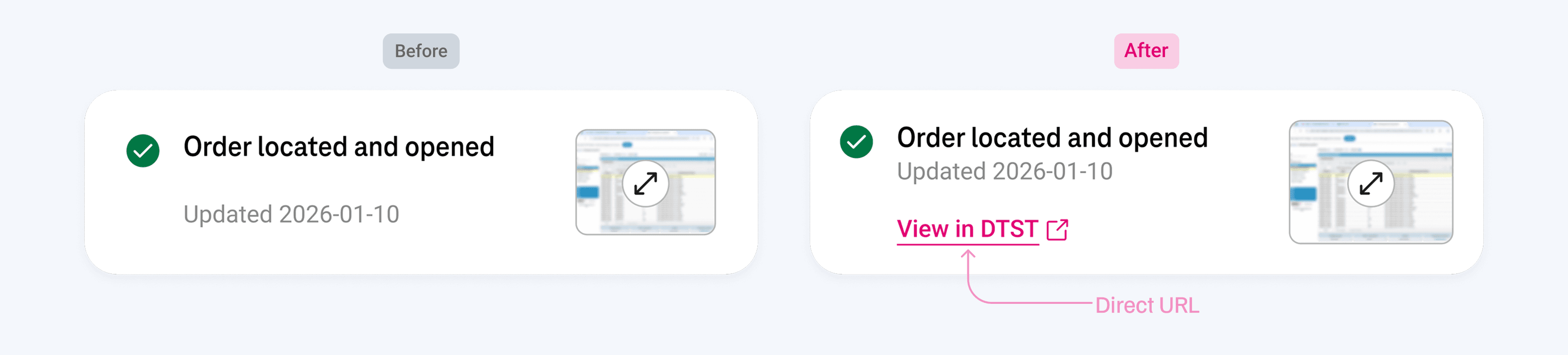
Instead of asking them to trust our interface, I gave them a direct path to verify the result in the live system.
Instead of asking them to trust our interface, I gave them a direct path to verify the result in the live system.
③ What should I do now? → State & Tag mapping
③ What should I do now? → State & Tag mapping
The moment the system is quiet, users assume failure.
The moment the system is quiet, users assume failure.
What I found
What I found
Development states were too technical and fragmented to explain what was happening or what users should do next.
Development states were too technical and fragmented to explain what was happening or what users should do next.
What changed
What changed
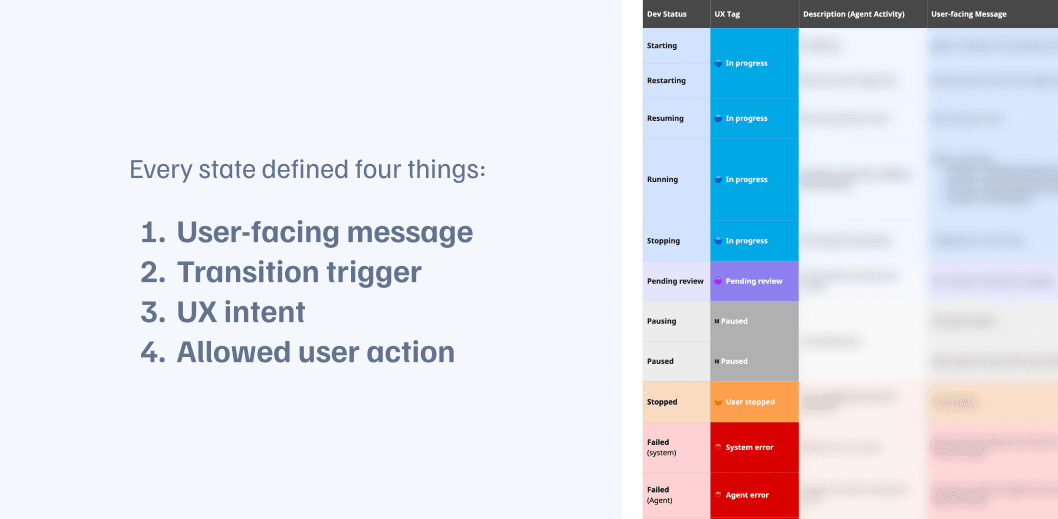
I remapped system-level states into user-facing states aligned with the live development environment. The goal was simple: at every state, users should know whether to wait, intervene, or verify.
I remapped system-level states into user-facing states aligned with the live development environment. The goal was simple: at every state, users should know whether to wait, intervene, or verify.
Outcome
Outcome
The pilot validated expert-supervised AI and secured expansion
Operational
Operational
0 → 250 (pilot)
0 → 250 (pilot)
0 → 250 (pilot)
0 → 250 (pilot)
+Company-wide rollout planned
Pilot complete,
company-wide rollout planned
Pilot complet,
company-wide rollout planned
User
User
8 → 0
8 → 0
8 → 0
“System frozen” reports
“System frozen” reports
during execution
Delivery
Delivery
2w → 1w
2w → 1w
2w → 1w
Design-to-Dev delivery time
Design-to-Dev delivery time
Business
Business
PoC → 2 Pilots
PoC → 2 Pilots
Secured expansion sign-off
Secured expansion sign-off
What's next
What's next
The pilot validated the shift from manual execution to expert-supervised AI and secured expansion to the next phase
The pilot validated the shift from manual execution to expert-supervised AI and secured expansion to the next phase