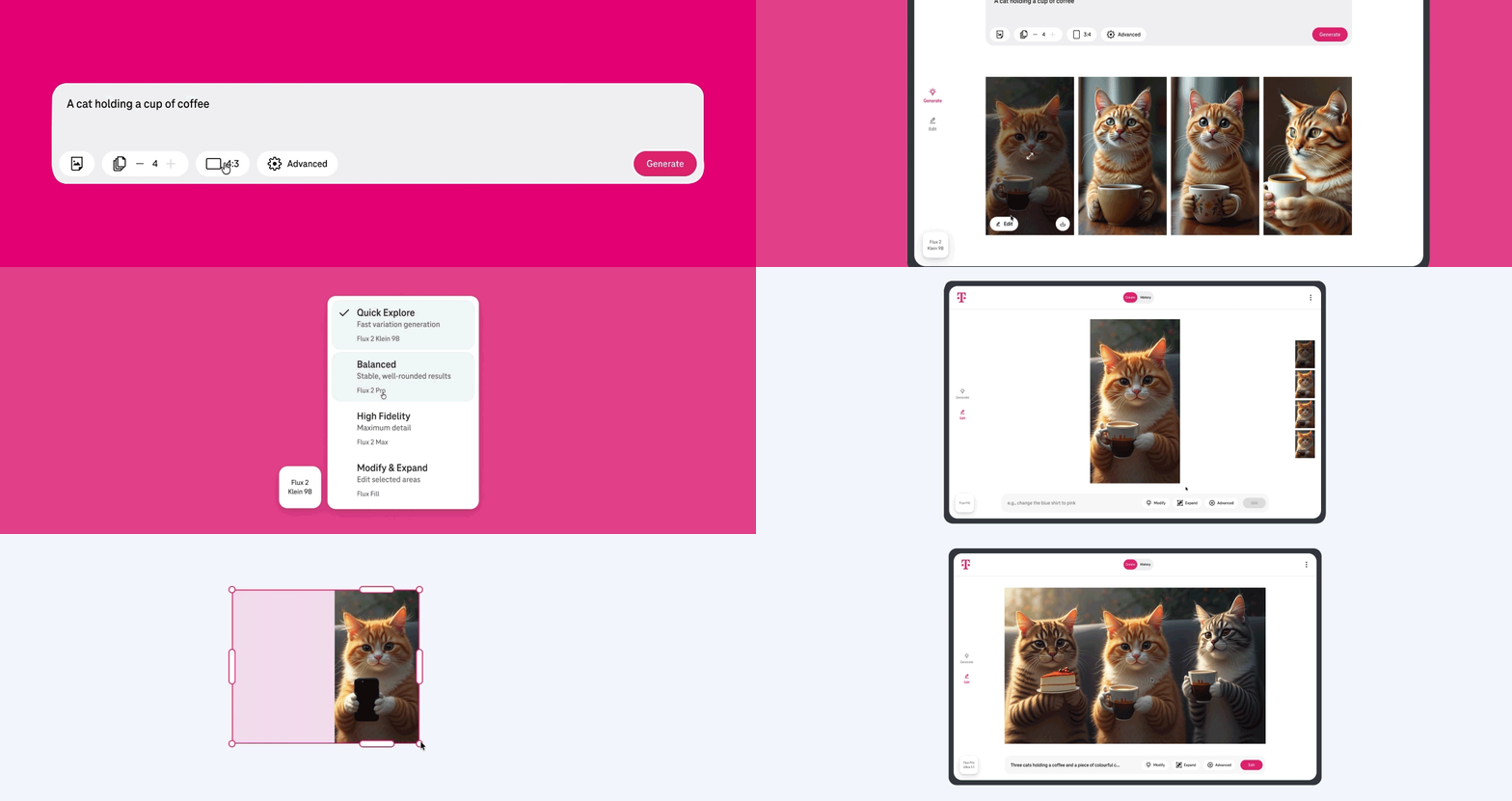
Enterprise Gen-AI Image Creation for Non-Experts
Breaking agency dependency, reducing turnaround from 2 days to 1 hour with in-house AI
Breaking agency dependency, reducing turnaround from 2 days to 1 hour with in-house AI
This project was originally scoped for an external agency. I proposed bringing it in-house to ensure long-term scalability. This enabled ~1h production (vs. 2 day), higher CTR (0.38% → 0.53%), and 2,000+ company-wide rollout with the team.
This project was originally scoped for an external agency. I proposed bringing it in-house to ensure long-term scalability. This enabled ~1h production (vs. 2 day), higher CTR (0.38% → 0.53%), and 2,000+ company-wide rollout with the team.
Timeline
Timeline
May 2025-Present
May 2025-Present
Platform
Platform
Responsive Web
Responsive Web
Team
Team
1 Designer
3 Engineers
1 AI engineers
1 Product Manager
1 Designer
3 Engineers
1 AI engineers
1 Product Manager
Roles
Roles
Research planning & user interviews
IA and workflow design
Proxy metrics for constrained data
Iteration strategy
Research planning & user interviews
IA and workflow design
Proxy metrics for constrained data
Iteration strategy
Problem
Problem
All teams relied entirely on external stock imagery and agency production, resulting in high per-asset costs and persistent brand inconsistency.
All teams relied entirely on external stock imagery and agency production, resulting in high per-asset costs and persistent brand inconsistency.

UX Challenge
How do you enable non-experts to produce business-effective assets without depending on agencies for every iteration?
How do you enable non-experts to produce business-effective assets without depending on agencies for every iteration?
Solution
Solution
An AI image tool optimised for people with no prior AI experience, removing technical barriers without removing capability.
An AI image tool optimised for people with no prior AI experience, removing technical barriers without removing capability.
0.38% → 0.53% CTR
2d → 1h production
0 → 2,000+ company-wide rollout
0 → 2,000+ company-wide rollout

Deep Dive
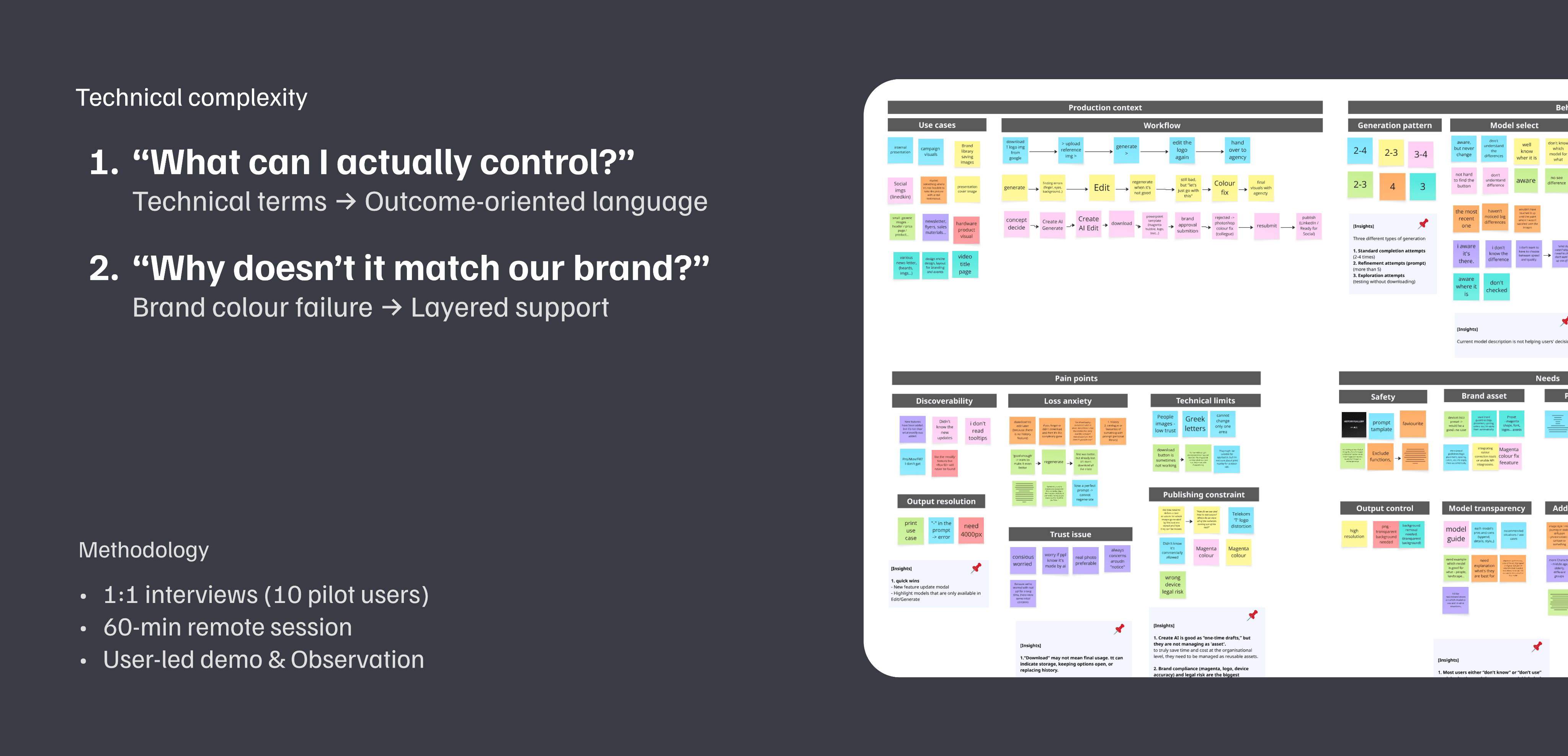
Early research revealed two barriers for non-technical users
Early research revealed two barriers for non-technical users
Users rarely found the product difficult to use but they struggled with 2 fundamental questions.
Users rarely found the product difficult to use but they struggled with 2 fundamental questions.
Key Decisions
① What can I actually control? → Outcome-oriented language
Users skipped entire controls they couldn't understand.
What I found
Interfaces exposed raw technical terminology to non-technical users.
What changed
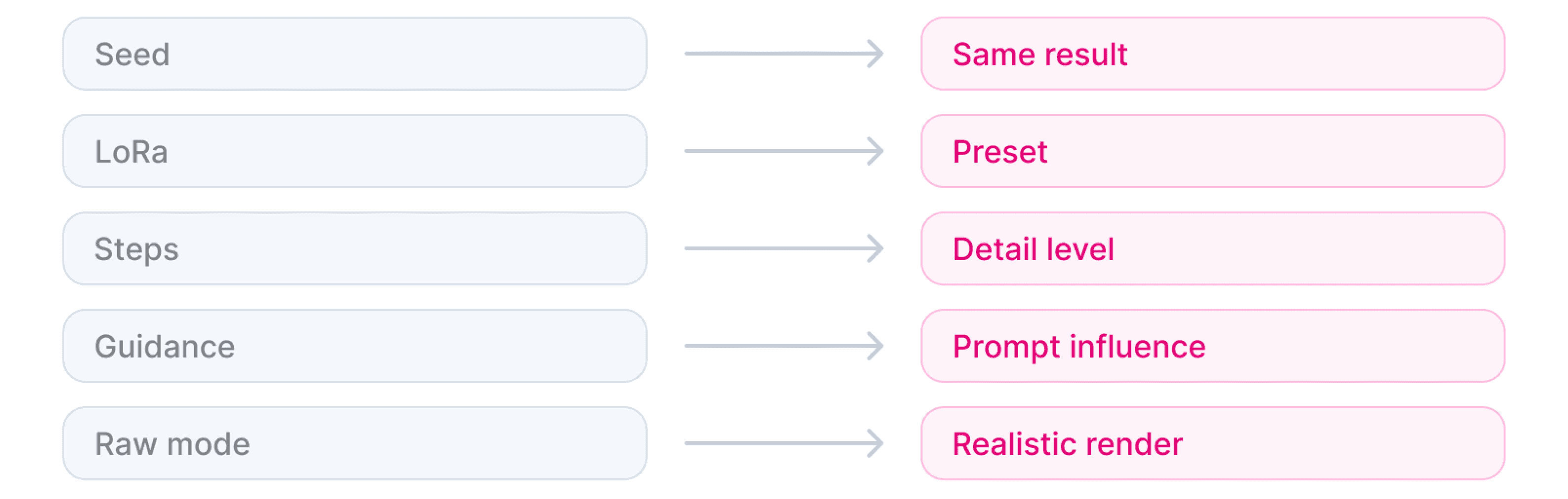
I renamed parameters around the outcome users were trying to achieve, while adding tooltips with original technical terms for users who wanted to go deeper.
What I found
Interfaces exposed raw technical terminology directly to non-technical users.
What changed
I renamed parameters around the outcome users were trying to achieve, while adding tooltips with original technical terms for users who wanted to go deeper.
① What can I actually control? → Outcome-oriented language
Users skipped entire controls they couldn't understand.
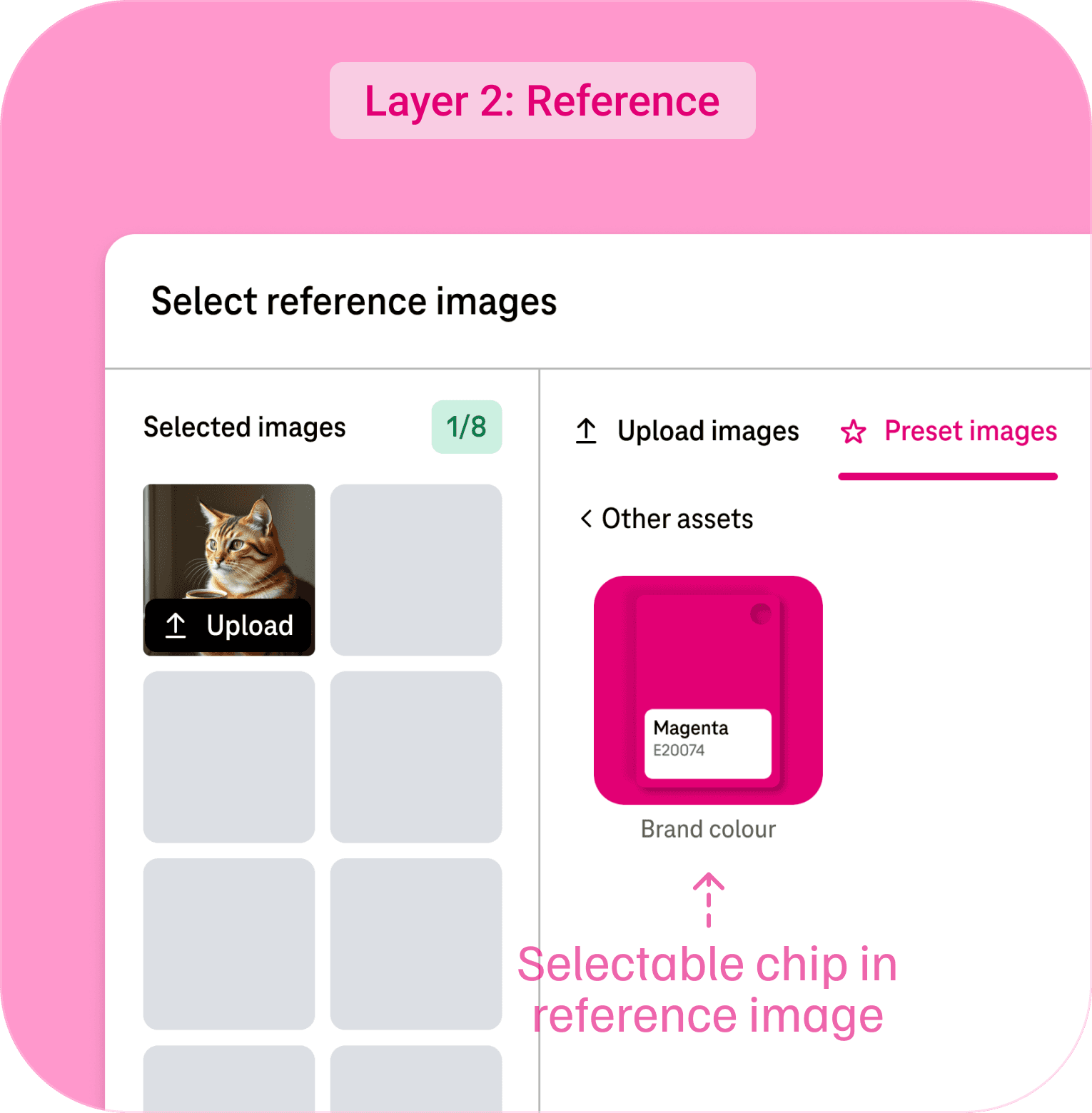
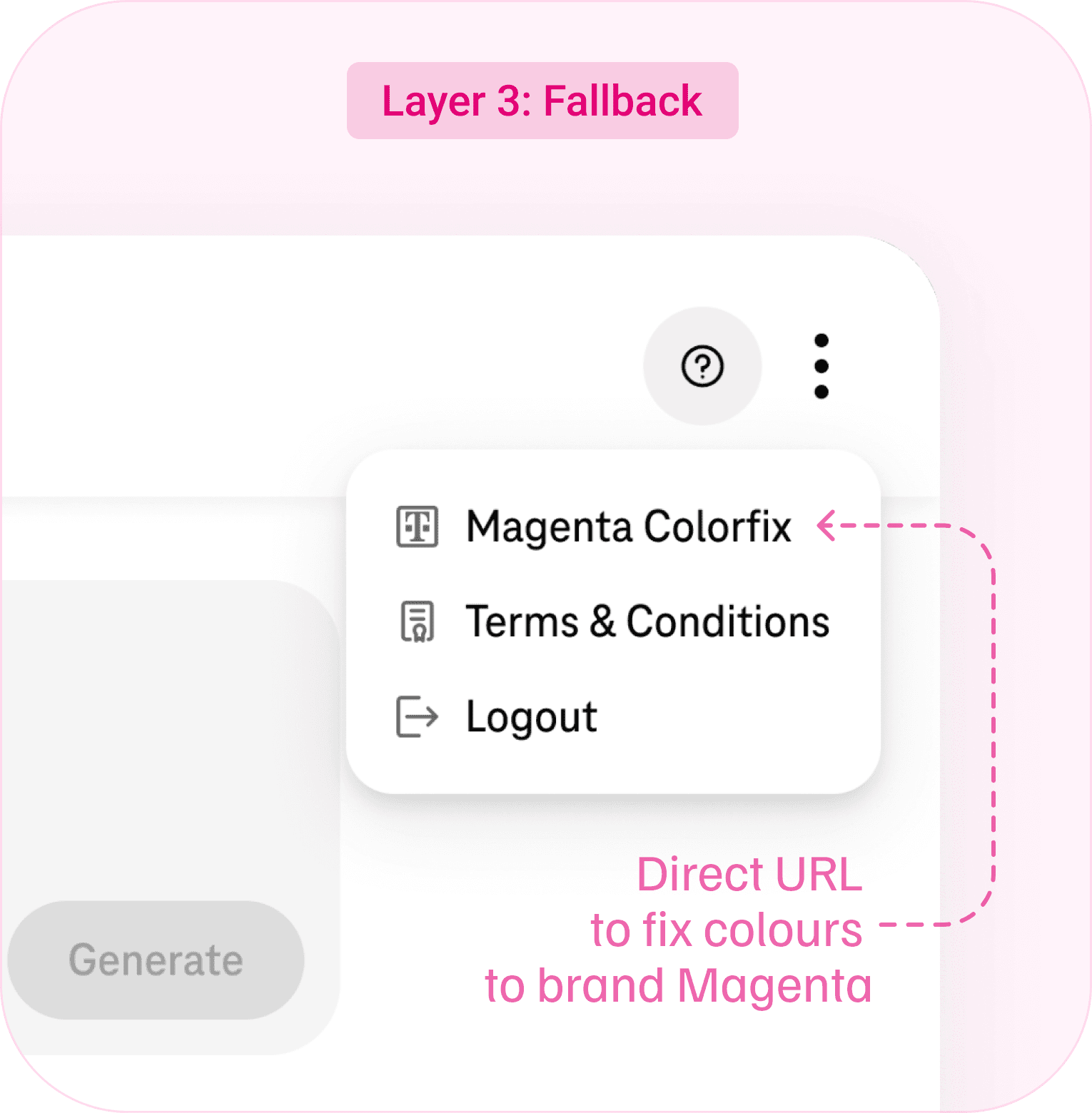
② Why doesn’t it match our brand? → Layered support
The model consistently misread our brand Magenta. I designed around the limitation instead of hiding it.
What I found
The model consistently misread brand colours, even when explicitly defined in prompts.
How to solve
Testing showed that visual colour references produced more reliable results than text descriptions.
What changed
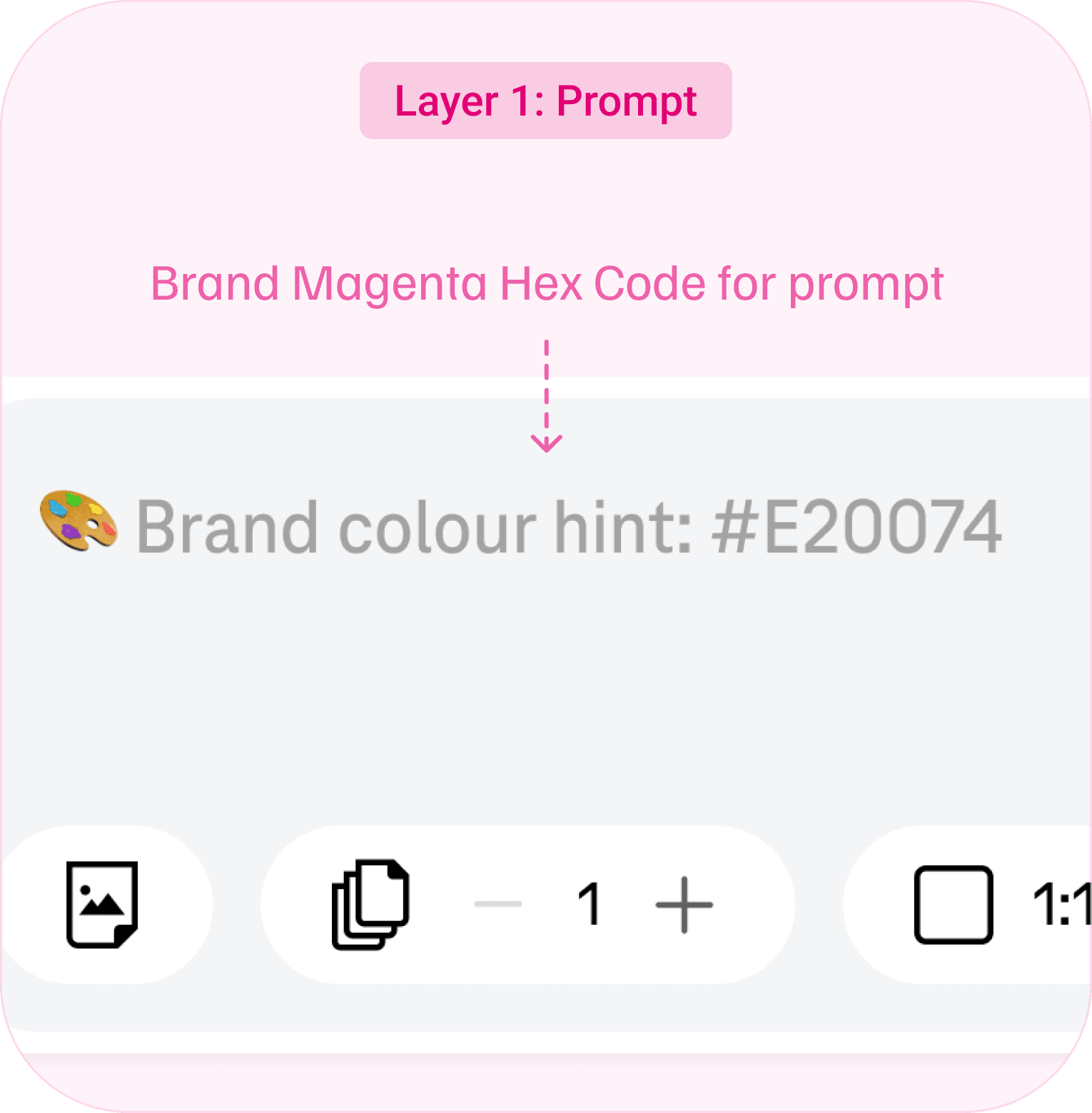
Designed 3 layered support around the limitation:
hex colour hints, selectable colour chips for guided control, and quick access to the existing ColourFix workflow as a fallback.
② Why doesn’t it match our brand? → Layered support
The model consistently misread our brand Magenta. I designed around the limitation instead of hiding it.
What I found
The model consistently misread brand colours, even when explicitly defined in prompts.
How to solve
Testing showed that visual colour references produced more reliable results than text descriptions.
What changed
Designed 3 layered support around the limitation: hex colour hints, selectable colour chips for guided control, and quick access to the existing ColourFix workflow as a fallback.
Iteration
Single-model usage dropped from 91% to 56%, but then it rebounded to 85%
Single-model usage dropped from 91% to 56%, but then it rebounded to 85%
→ "I just don’t care. I’d rather not think about the model."
Pilot interview, Marketing expert
→ "I just don’t care. I’d rather not think about the model."
Pilot interview, Marketing expert
What I found
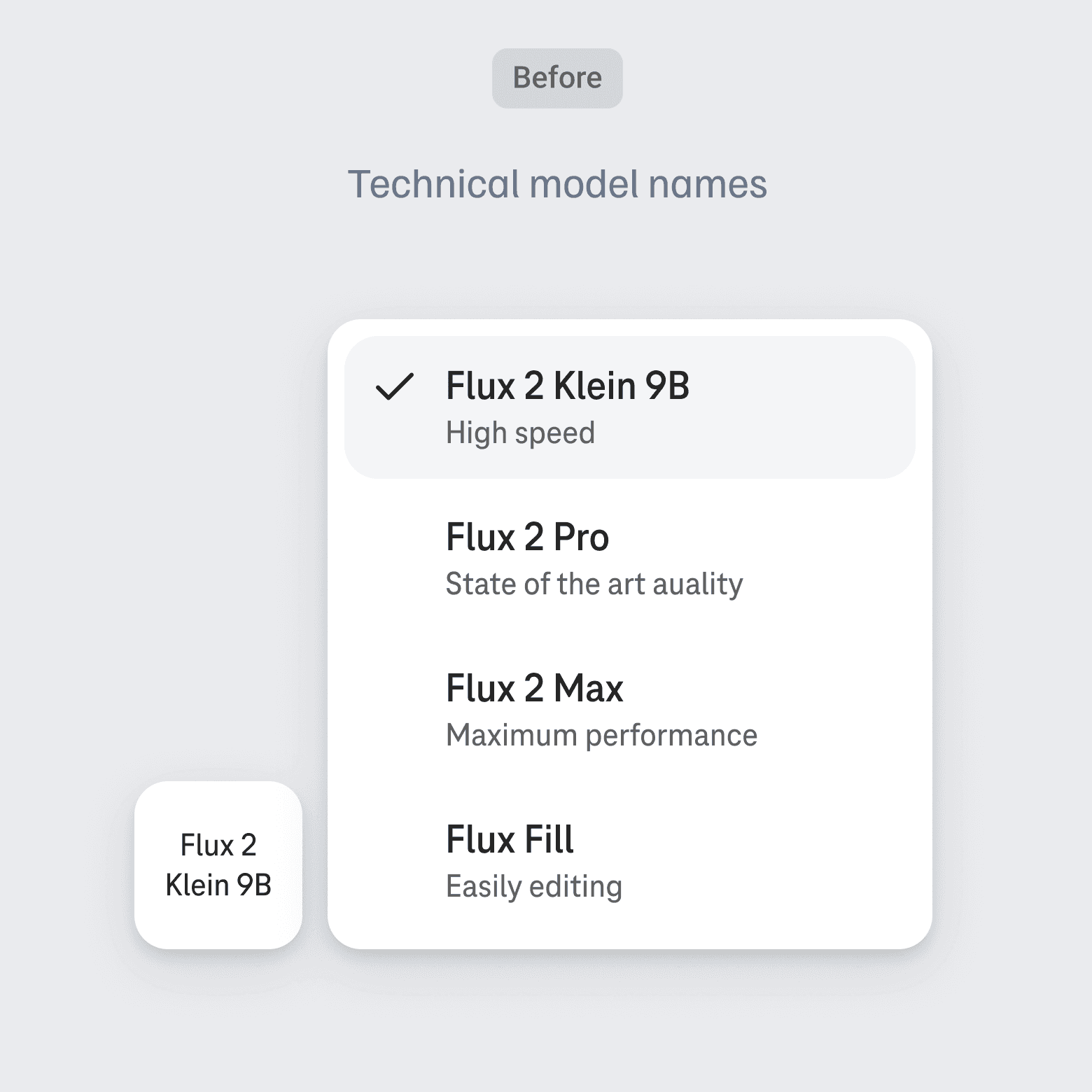
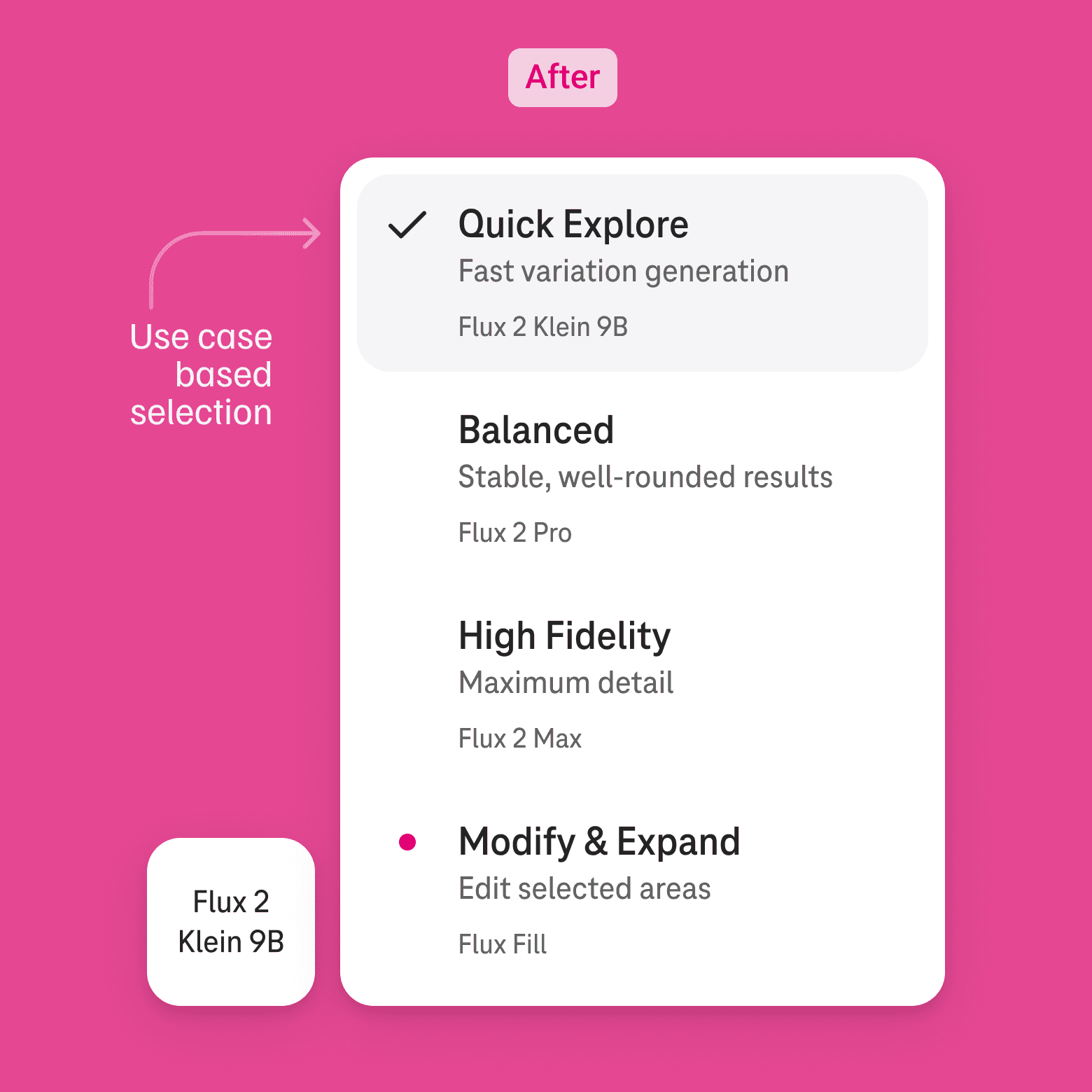
91% of generations were concentrated on one model. I suspected technical model names were limiting discovery, so I tested and shipped outcome-oriented labels.
What changed
Single-model usage dropped to 56% within two weeks, but rebounded to 85% a month later.
What I learned
Follow-up research showed that discoverability was not the root problem. Users did not want clearer model choices; they wanted less model-selection effort.
*3-phase research (PoC→Pilot→Post-pilot): Interviews (n=18), Surveys (n=50), 1 workshop
Next direction
Automatic model recommendation based on prompt content was proposed, but is not yet in development.
What I found
91% of generations were concentrated on one model. I suspected technical model names were limiting discovery, so I tested and shipped outcome-oriented labels.
Next direction
Automatic model recommendation based on prompt content was proposed, but is not yet in development.
What I learned
Follow-up research showed that discoverability was not the root problem. Users did not want clearer model choices; they wanted less model-selection effort.
*3-phase research (PoC→Pilot→Post-pilot): Interviews (n=18), Surveys (n=50), 1 workshop
What changed
Single-model usage dropped to 56% within two weeks, but rebounded to 85% a month later.
Constraints
Designed proxy metrics with limited tracking resources
Designed proxy metrics with limited tracking resources
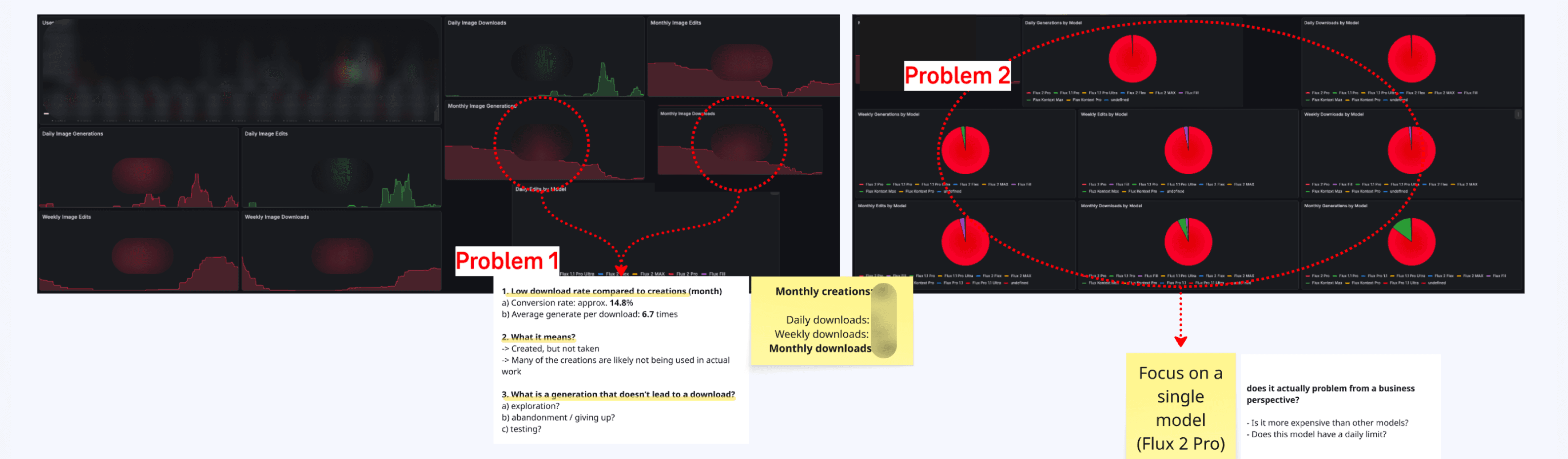
Full event tracking was not available before launch due to limited engineering resources, so I used Generate → Download as a proxy metric and triangulated it with surveys and interviews.
Full event tracking was not available before launch due to limited engineering resources, so I used Generate → Download as a proxy metric and triangulated it with surveys and interviews.
Outcome
Outcome
From PoC to production, the tool showed higher CTR than agency assets in A/B test across 1.49M impressions - indicating strong trust in AI-generated assets
From PoC to production, the tool showed higher CTR than agency assets in A/B test across 1.49M impressions - indicating strong trust in AI-generated assets
14.8% → 20%
14.8% → 20%
Download conversion (research-driven)
Download conversion
(research-driven)
0 to 2000+
0 to 2000+
Company-wide rollout
Company-wide rollout
2d → ~1h
2d → ~1h
Assets creation time based on interviews
Assets creation time
(based on interviews)
0.38% → 0.53%
0.38% → 0.53%
Higher than agency assets in A/B tests
Higher than agency assets
(in A/B tests)
14.8% → 20%
Download conversion
(research-driven)
0 to 2000+
Company-wide rollout
2d → ~1h
Assets creation time
(based on interviews)
0.38% → 0.53%
Higher than agency assets
(in A/B tests)